

heat pump water heater rebate opportunities in 2024-2026 can dramatically lower the cost of upgrading to an efficient electric system—if you know exactly how to qualify and avoid costly missteps. With changing federal, state, and utility incentives, homeowners need a clear, honest roadmap to maximize savings and avoid common pitfalls. This guide breaks down every detail you need to know to claim your heat pump water heater rebate and make an informed decision for your home.
Key Takeaways
- Substantial federal tax credits and state rebates are available for qualifying heat pump water heaters through 2025, but rules are strict—missing one step can cost you thousands.
- Not all heat pump water heater rebates can be “stacked”—some must be subtracted before calculating your federal tax credit, reducing your net benefit if you’re not careful.
- Installation documentation, ENERGY STAR ratings, and project timing are non-negotiable for eligibility; inexperienced contractors or DIY mistakes can void your rebate.
- What Are Heat Pump Water Heater Rebates, and Why Do They Matter?
- How to Claim Your Heat Pump Water Heater Rebate: Step-by-Step Guide
- Advanced Analysis & Common Pitfalls
- Conclusion
- FAQ
What Are Heat Pump Water Heater Rebates, and Why Do They Matter?
Heat pump water heater rebates are financial incentives offered by federal, state, and utility programs to help homeowners offset the upfront cost of switching to a high-efficiency electric water heater. These rebates and tax credits can fund a substantial portion of the installation, making an upgrade much more affordable if you qualify. With water heating accounting for up to 20% of a home’s energy bill, an efficient model can cut both carbon emissions and monthly costs. However, improperly navigating the rebate landscape can leave money on the table or disqualify your project entirely.
Currently, the largest incentives are:
- Federal 25C Energy Efficient Home Improvement Tax Credit – Save 30% of costs up to $2,000 annually on qualifying models placed in service between January 1, 2023 and December 31, 2025. Models must have a Uniform Energy Factor (UEF) of 2.2 or higher, or meet/exceed the highest Consortium for Energy Efficiency tier. See ENERGY STAR details
- Inflation Reduction Act (IRA) Rebates – Up to $1,750 at point-of-sale for low/moderate-income households, plus Home Efficiency Rebates (up to $4,000/$8,000 with significant energy savings). See state program availability.
See Rheem federal incentives guide - State and utility rebates – Highly variable. For example, NorthWestern Energy (MT) and the City of Bozeman offer $500 rebates plus a $75 home survey. Many programs require ENERGY STAR certification and pro installation.
To see a full example of ways to combine energy efficiency for maximum savings, check out our heat pump water heater savings guide.
How to Claim Your Heat Pump Water Heater Rebate: Step-by-Step Guide
Claiming your heat pump water heater rebate can be straightforward—but only if you follow each step to the letter. Here’s how to make sure you receive every incentive you’re eligible for, and how to avoid disqualification.
- 1. Carefully select a qualifying model.
- Your water heater must be listed as ENERGY STAR and display a UEF of at least 2.2, or meet the highest CEE tier (check the ENERGY STAR product list).
- 2. Hire a professional installer and retain all documentation.
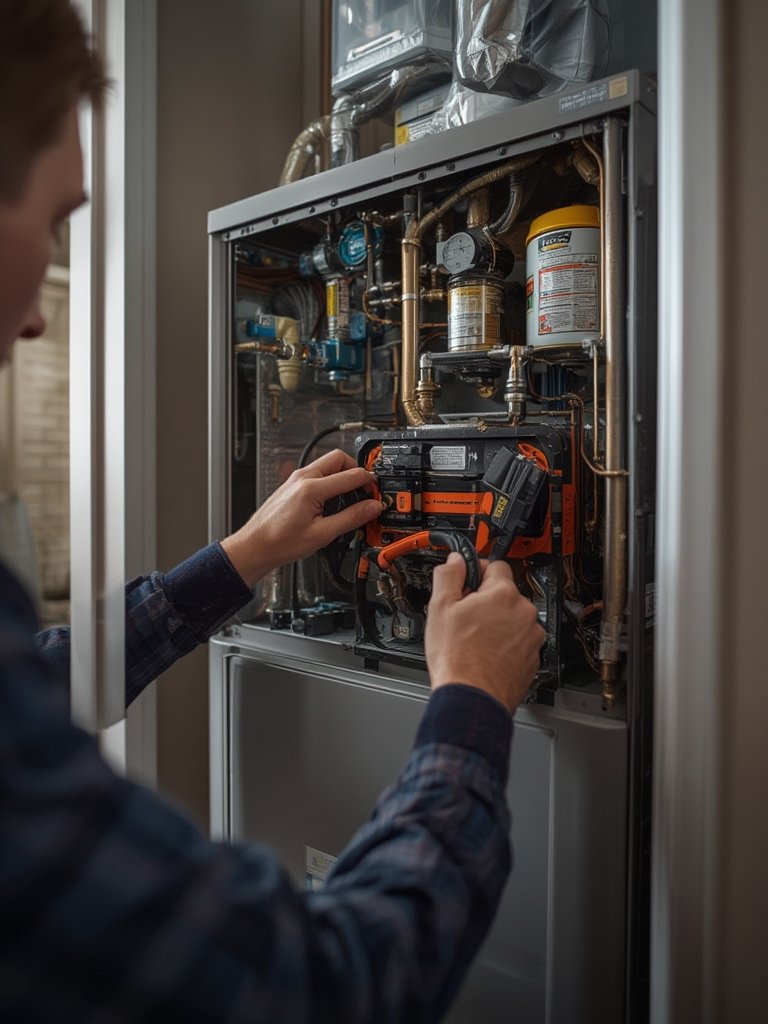
- Most rebates and all federal credits require proof of professional installation. DIY installs nearly always void eligibility.
- 3. Apply for utility/state rebates first.
- Visit your utility’s website to find up-to-date local rebates. Submit all forms and surveys required—some programs (like Bozeman) require a site survey and pre-approval.
- 4. Calculate your net cost after state/utility rebates.
- The IRS requires you to subtract these rebates from your purchase price when claiming the 25C tax credit. Example: If your HPWH system is $3,000, and you receive $750 in utility/state rebates, your federal 25C credit is 30% of $2,250 = $675.
- 5. Claim your federal tax credit via IRS Form 5695.
- Include all installation receipts and proof of qualifying equipment. Submit the form with your annual tax filing.
- 6. For IRA rebates (low/moderate income), follow state-specific guidance.
- These are point-of-sale in some states, or require applications in others. Ask your installer or check with your state energy office for availability and household income thresholds.
For deeper savings, look at other energy upgrades eligible for rebates, like garage shelving systems to house your new equipment, battery storage if pairing with solar, or EV charger installations to maximize your home’s electrification profile.
Advanced Analysis & Common Pitfalls
The current landscape of heat pump water heater rebates is generous, but fraught with bureaucratic details, eligibility fine print, and a risk of lost savings. Here are the top issues to watch for:
- Rebate stacking misunderstandings: Many homeowners incorrectly add state/utility rebates to the federal tax credit, expecting a giant windfall. In reality, the IRS requires state and utility rebates be subtracted first. Double dipping is not allowed. (IRS source)
- Installation documentation errors: Incomplete paperwork, missing receipts, or a non-licensed installer can trigger a rebate denial or IRS audit.
- Eligibility timing: Federal credits expire after December 31, 2025 for HPWHs under the 25C provision, although future extensions are possible but not guaranteed.
- Inability to combine with new home construction: These incentives are for existing homes—new homes and landlord-owned rentals do not qualify.
| Rebate/Credit | Max Amount | Requirements | Application Process |
|---|---|---|---|
| Federal 25C Tax Credit | $2,000 per year (30%) | ENERGY STAR, UEF ≥2.2, pro install | IRS Form 5695 with tax filing |
| IRA Rebate | $1,750 (income-limited) | Low/moderate income, ENERGY STAR | Point-of-sale or application, varies by state |
| State/Utility Rebate | $200-$750+ typically | Varies: may require pre-approval, survey | Submit via utility; sometimes instant at sale |
Most top competitor articles fail to mention:
- How to subtract rebates from your federal tax credit calculation (critical for accurate budgeting)
- That federal incentives do not extend past 2025 (without Congressional renewal)
- That state and utility programs outside of major service areas may have limited or outdated incentive pools
Need more advanced cost-cutting? Consider optimizing your thermostat or researching solar panels to pair with your new water heater for best total home efficiency.

Conclusion
The window to claim a heat pump water heater rebate is now—but strict requirements and nuanced application rules mean uninformed homeowners risk missing out. Stack incentives smartly, document everything, and work with pros. Stay alert for changes as deadlines approach and new state programs launch.
Ready to slash your water heating costs and carbon footprint? Download all rebate forms, verify your equipment eligibility, and compare local installers before pulling the trigger. For a full cost-benefit breakdown or more upgrade ideas, see our complete guide to heat pump water heater savings.
FAQ
What tax credit can I claim for a heat pump water heater in 2024?
You can claim 30% of your total installed cost, up to $2,000, under the federal 25C Energy Efficient Home Improvement Tax Credit, if your equipment is ENERGY STAR and was installed between January 1, 2023 and December 31, 2025. Details here.
Am I eligible for an IRA rebate if I already received a state or utility rebate?
Yes, if you are low or moderate income and your state has launched the program, you may receive a point-of-sale IRA rebate in addition to state or utility rebates. The net federal tax credit is calculated after all other rebates are subtracted.
Can landlords or new construction projects claim heat pump water heater rebates?
No, federal 25C credits and most state/utility rebates are for existing primary or secondary residences, not for landlord-owned rentals or brand new homes.
Do I need a professional installer to qualify for rebates?
Yes, proof of professional installation is required for almost all programs and for federal tax credits. DIY installations are typically excluded from eligibility.
Where can I find up-to-date rebate forms and income requirements?
Start with ENERGY STAR’s resource page and your state’s energy office site for the latest forms, eligible models, and income thresholds.