

AFCI breaker upgrade is a simple step that can dramatically lower your risk of electrical fires at home, but most homeowners overlook or misunderstand this life-saving technology.
Key Takeaways
- AFCI breaker upgrades prevent nearly 50% of home electrical fires and reduce fire-related deaths and injuries.
- Nuisance tripping rates for AFCI breakers are comparable to or lower than standard breakers, despite common misconceptions.
- The long-term cost of an AFCI upgrade averages less than $1 per month over 30 years—significantly less than the cost of fire damage or higher insurance premiums.
- What Is an AFCI Breaker Upgrade and Why Bother?
- How to Perform an AFCI Breaker Upgrade (Step-by-Step)
- Advanced Analysis and Common Pitfalls: What Goes Wrong?
- Conclusion: Is an AFCI Breaker Upgrade Worth It?
- FAQ: AFCI Breaker Upgrades
What Is an AFCI Breaker Upgrade and Why Bother?
An AFCI (Arc Fault Circuit Interrupter) breaker upgrade involves replacing traditional circuit breakers in your electrical panel with specialized AFCI breakers. These devices detect dangerous electrical arcs—which standard breakers ignore—that can easily start fires inside your walls. According to the NFPA, 50 to 75 percent of residential electrical fires are linked to arc faults, making AFCI protection one of the most potent fire prevention strategies for U.S. homes. TechXplore
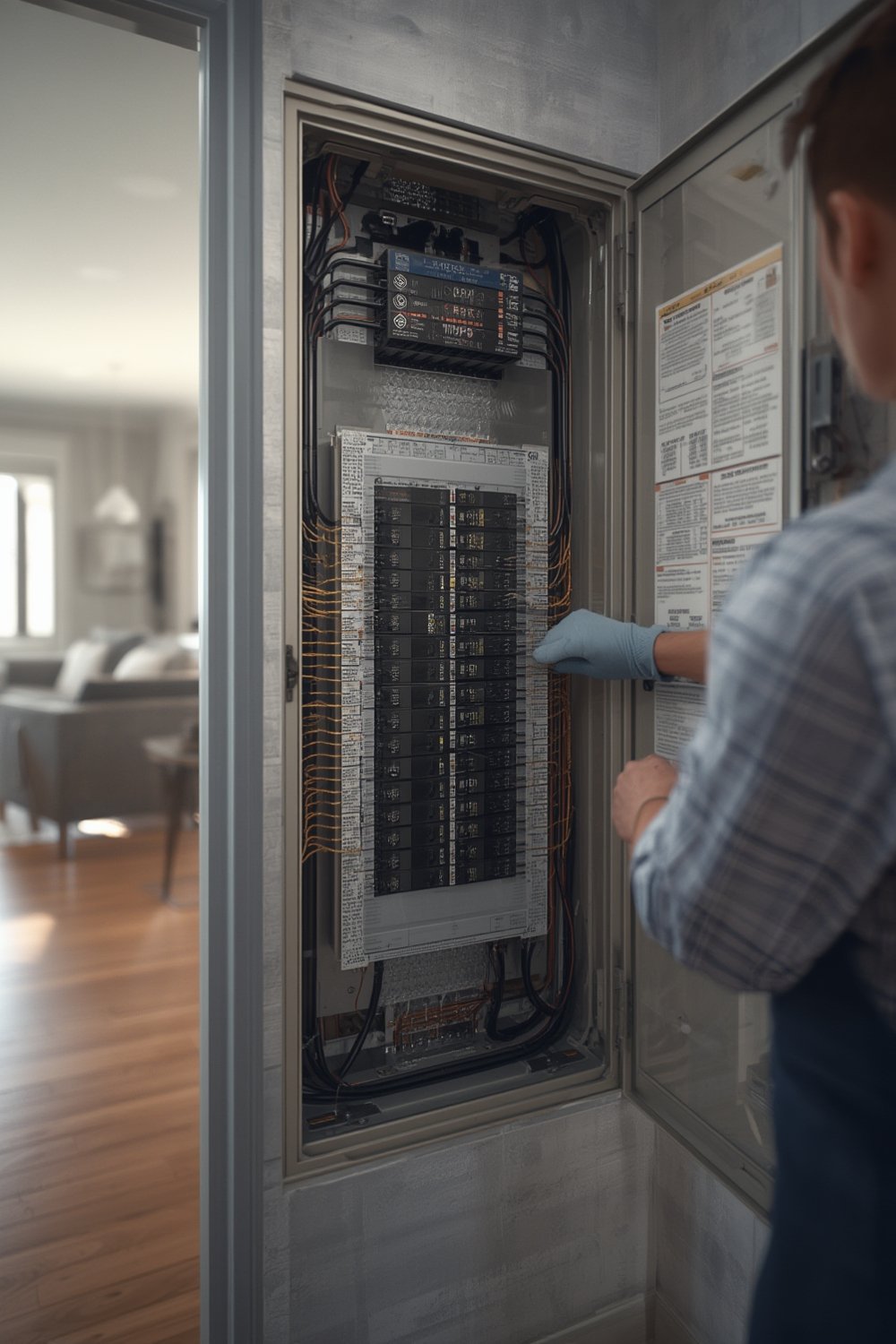
Traditional breakers only respond to overloads or short circuits—they do nothing to stop the hidden, smoldering arcs that cause most electrical fires. AFCIs work differently by identifying unique high-frequency signals created by even tiny fugitive arcs, then quickly disconnecting power before a fire can start. Since 1999, when the National Electrical Code began phasing in AFCIs, annual electrical fire rates in American homes plummeted from 75,000 to around 25,000. Fire-related deaths and injuries also dropped significantly. AFCI Safety Fast Facts
For homeowners, retrofitting an older home with AFCI protection can mean converting nearly every branch circuit in the panel—especially bedrooms, living areas, and new additions—as these are the areas code targets for maximum safety. Unlike standard upgrades, investing in AFCIs is about proactively neutralizing risks you haven’t noticed yet but that put your family and property at constant risk.
To see the financial side, consider: outfitting an average 2,000 square foot home with AFCI protection costs about $300 up front, or just 83 cents a month over a 30-year mortgage. Compare that to an average of $1.5 billion in property loss per year from electrical fires—and the ROI is self-explanatory. IECI AFCI Report
If you’re already optimizing your home for energy and safety—perhaps with a heat pump water heater for cost savings—AFCI upgrades are one of the highest-ROI improvements you can make, with proven data and minimal long-term hassle.
How to Perform an AFCI Breaker Upgrade (Step-by-Step)
Upgrading to AFCI protection is a straightforward process, but attention to details and safety steps is crucial. Unless you’re highly experienced with electrical systems, it’s best to get a licensed electrician involved. Here’s how the process works, both for DIY assessment and what to expect from a pro.
1. Verify Local Code and Panel Compatibility
Start by checking your city or state’s electrical code requirements and whether your panel supports AFCI breakers. Some older or obscure panels may require adapter hardware or even a partial panel upgrade to accept new breaker types. It’s always safe to consult your local inspection office or a certified electrician at this stage.
2. Plan Circuit Coverage
Identify which branch circuits need AFCI protection. Modern codes often require AFCIs for all living areas, bedrooms, and sometimes kitchens and laundry rooms. Mark these circuits clearly—either on a printed panel map or with colored labels.
3. Purchase AFCI Breakers
AFCI breakers typically cost $35–$50 each; plan for every required circuit. Shop for trusted brands and UL-labeled devices. Buying breakers matched to your panel brand is necessary—the mounting foot, lug configuration, and throw lever all vary by manufacturer.
4. Turn Off Main Power
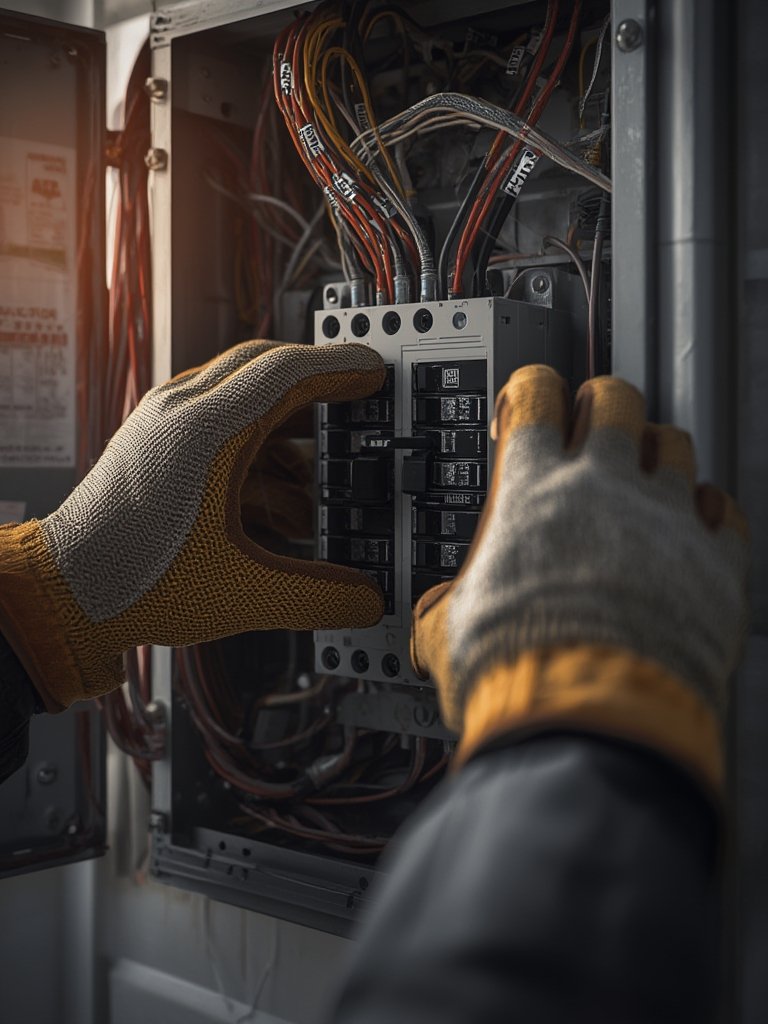
Never attempt to swap breakers while the main panel is energized. Shut off the main breaker completely and test downstream circuits to confirm they are de-energized using a non-contact voltage tester.
5. Remove and Replace Breakers
With the panel cover off, gently release the old breakers assigned to the targeted circuits. Install AFCI breakers in their place, seating each firmly and connecting the load and neutral conductors as instructed (AFCIs typically have an additional pigtail wire for the neutral connection).
6. Restore Power and Test AFCI Functions
Replace the panel cover, restore the main power, and systematically test each AFCI using its built-in test button. Confirm circuits power up correctly and remain stable when lights, appliances, or outlets are in use.
If a breaker trips immediately after powering on, double-check your wiring for errors or shared neutrals—these are common causes of false trips (see the pitfalls section below).
For optimal overall protection, pair your AFCI upgrade with basic safety measures such as smoke alarms and UL-listed surge protection outlets—just as you’d pair a washable rug for floor safety with a good rug pad for accident prevention.
7. (Optional) Dual-Function AFCI/GFCI Breaker Installation
If certain circuits serve wet areas (kitchen, bathroom, laundry), consider installing dual-function AFCI/GFCI breakers. These provide both arc fault and ground fault protection on a single line. This may be code-required in some states.
After completion, clearly label all AFCI and dual-function protected circuits on your panel for future reference and ease during inspections or repairs.
Advanced Analysis and Common Pitfalls: What Goes Wrong?
While AFCI upgrades are among the most cost-effective and effective fire prevention tools, they come with challenges. Here’s how to avoid the most common headaches—plus an evidence-based look at the technology’s performance.
Common Pitfalls and How to Avoid Them
- Nuisance Tripping: Data shows 23% of AFCI service calls are for tripped breakers, but this is similar to traditional breakers (28%). ESFI AFCI Survey 2024 Nuisance trips may occur if you have shared neutral wiring, outdated appliances, or non-UL devices that emit excessive noise. Most nuisance trips are solved by correcting wiring or removing substandard electronics.
- Aging Wiring and Shared Neutrals: Many homes (especially pre-1980 construction) use shared neutrals or have degraded insulation. These can trigger frequent false trips after an AFCI upgrade. If so, correcting wiring or selectively relocating appliances often resolves the issue.
- Breaker Compatibility Problems: Not all panels accept retrofit AFCI breakers. If your main panel is obsolete or incompatible, you may need to upgrade or replace it to use AFCIs. It’s like considering new installation requirements for space-saving laundry solutions—compatibility comes first.
- Installation Errors: Incorrect pigtail or neutral wire connections are a top cause of “instant trip” situations. Following the manufacturer’s instructions closely avoids this pitfall.
- Technology Myths: Many homeowners believe AFCIs often “trip for no reason.” Yet, advanced systems now report a 0% false alarm rate during extended monitoring. Most tripping signals a genuine hazard, not a flaw in the technology Whisker Labs Performance Data.
AFCI vs. Traditional vs. GFCI Breakers: Comparison Table
| Aspect | AFCI Breakers | Traditional Circuit Breakers | GFCI Breakers |
|---|---|---|---|
| Primary Function | Detects and interrupts arc faults in wiring and devices | Protects against overloads and short circuits | Protects against ground faults and shock |
| Fire Prevention | Prevents 50% of home electrical fires; zero documented fires on AFCI-protected circuits | Does not address arc faults | Does not address arc faults |
| Tripped Breaker Frequency | 23% of service calls | 28% of service calls | 17% of service calls |
| Nuisance Tripping | On par with traditional breakers; rates declining with modern tech | Baseline for comparison | Lower nuisance rate |
| Detection Technology | High-frequency arc detection; both series and parallel faults | Current overload or direct short | Current imbalance |
| Dual-Function Options | Available; 14% of AFCI/GFCI calls involve tripped breakers | Not available | Can combine with AFCI |
| Compatibility with Modern Appliances | High | High | High |
Cost and ROI Reality
The average national material cost for an AFCI upgrade is about $38 per breaker or $300 for a typical home. This equates to roughly 83 cents per month over a 30-year mortgage—often less than your annual filter spend on a high-end acoustic panel or the cost difference between standard and SPC vs. laminate flooring. Few home investments provide this level of fire risk reduction for such a modest outlay.
What’s Missing in Most AFCI Guidance?
- Nearly all mainstream advice skips the detail that arc tracking is a long, invisible process—often progressing for weeks or years before an arc becomes dangerous. Early detection is critical and only AFCIs (or emerging plug-in sensors) can catch these threats before disaster strikes.
- Competing articles rarely address the financial angle: preventing even a single electrical fire pays for a lifetime of AFCI upgrades many times over—especially when factoring in lost property, higher insurance, or injury costs.
- Innovations such as “plug-in arc sensors” that analyze high-frequency signals are barely covered by most sources, yet these offer potential further advances in protection and proactive maintenance.
Conclusion: Is an AFCI Breaker Upgrade Worth It?
If you’re weighing the costs and complexities, current data makes it clear: an AFCI breaker upgrade offers unmatched protection against one of the most common and devastating sources of house fires. For about the cost of a monthly streaming subscription, you can virtually eliminate the risk of electrical arc fires in your home.
Ultimately, the choice isn’t just about electrical code compliance—it’s about peace of mind and insurance against irreversible loss. Don’t wait until a warning sign (or worse, a fire) to make a change. Invest in a professional AFCI breaker upgrade and protect your family and property for decades to come.
Ready to protect your home? Book a certified electrician for a quote or upgrade, and make sure your AFCI breaker upgrade is done right the first time.
FAQ: AFCI Breaker Upgrades
How much does an AFCI breaker upgrade cost?
The typical material cost in the United States is about $38 per breaker, or roughly $300 for a 2,000-square-foot home. Labor varies but often totals $350–$800 depending on panel accessibility and local rates.
Do AFCI breakers really prevent most electrical fires?
Yes. AFCIs can prevent nearly 50 percent of home electrical fires, and there have been no documented fires on AFCI-protected circuits according to industry reports.
Will an AFCI breaker trip more often than a standard breaker?
No. Survey data shows nuisance tripping rates are actually lower for AFCIs (23% of service calls) compared to standard breakers (28%). Proper wiring and quality appliances further reduce false trips.
Can I install AFCI breakers myself?
If you are skilled and comfortable with main panel work, it’s possible. But for safety and code reasons, hiring a licensed electrician is strongly recommended.
Are AFCI breakers compatible with all appliances?
Yes. Modern AFCIs are compatible with new appliances that carry a recognized safety certification (UL, CSA, Intertek). Issues may arise with very old or non-compliant devices.